 CosmoConifer
Archive · 2016 onward
Nine years, six names
Solvane was five other games before it was this one. I still have most of those builds, so here they are in order. Every screenshot, what had changed since the last one, and what the project was called at the time.
Each of these folders is dated by the last file modified inside that build, so what you're seeing is the day I last touched a version, not the day I started it. The oldest build I still have is dated 18 November 2016, but the project is older than that.
Why it kept changing names
Every time I came back to the project after a break, I renamed it. I naively thought that would make it feel more real, and that a new name meant this was the run where I buckled in and finally finished it.
Some of it was more boring than that. I'd research a name, find somebody already had it, and save the project under a different one. Other times GameMaker Studio 2 changed formats and the project had to be converted anyway, and a project I'd just converted felt like it had earned a new name too.
Eventually I got sick of renaming things and saved it as Space Game Project, which is what it stayed. That's the build that got rebuilt into Solvane.
18 November 2016
Starim
5 screenshots · the oldest build that survived
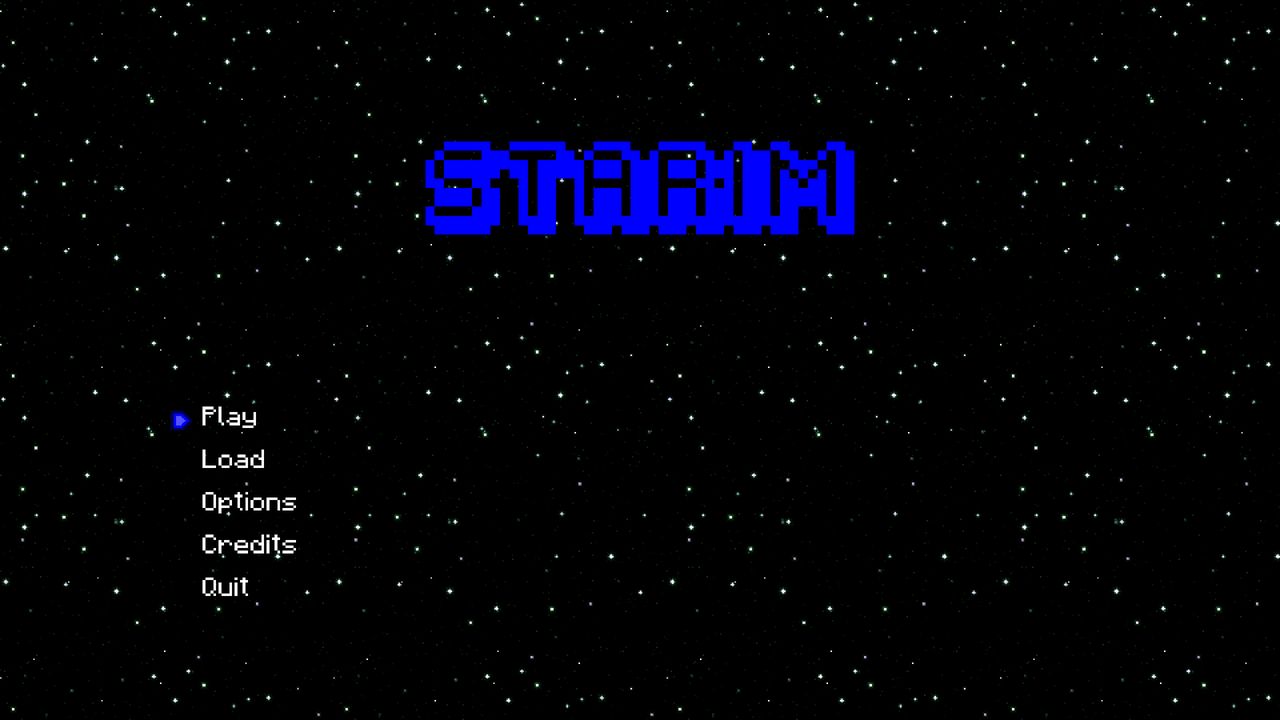
The earliest title screen I still have. Five menu items, most of which didn't do much yet.
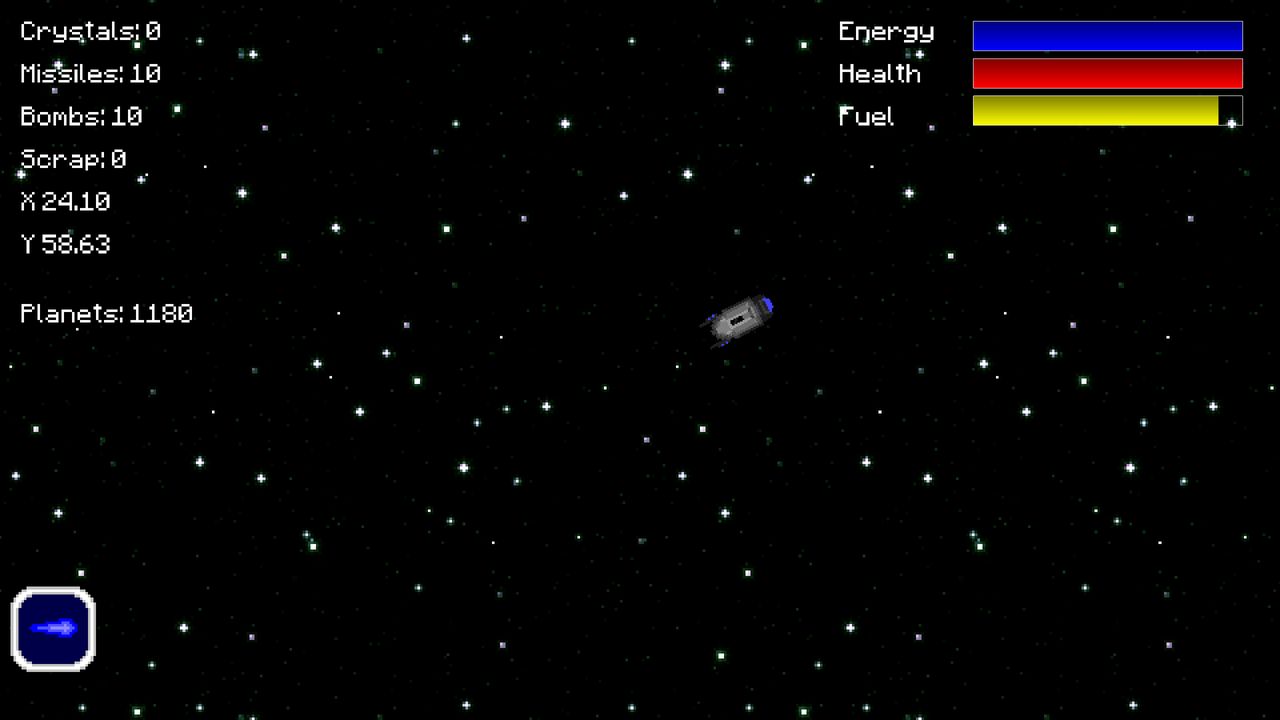
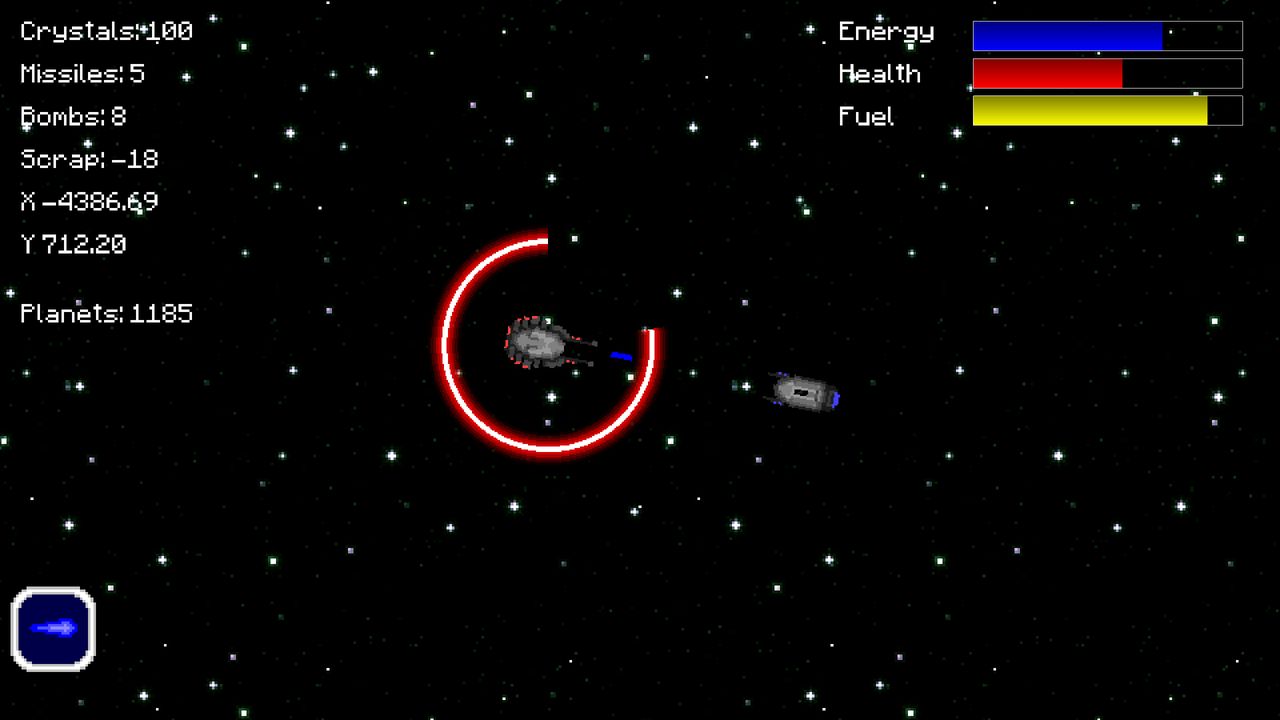
The oldest surviving build already has the idea the game still runs on. The counter in
the corner reads Planets: 1180, and nobody placed any of them. The galaxy
generates itself.
Almost nothing else is finished. The HUD is just the variable list printed to the screen: crystals, missiles, bombs, scrap, and the player's raw X and Y coordinates. Mining is a red arc that fills while you hold on a rock. There's a shop with three ships in it.
Building existed too, in the loosest sense. The only thing you could build was a wall, and nothing checked whether you could afford it, so the scrap counter just went negative and kept going. That's a bug, and it's in one of these shots.
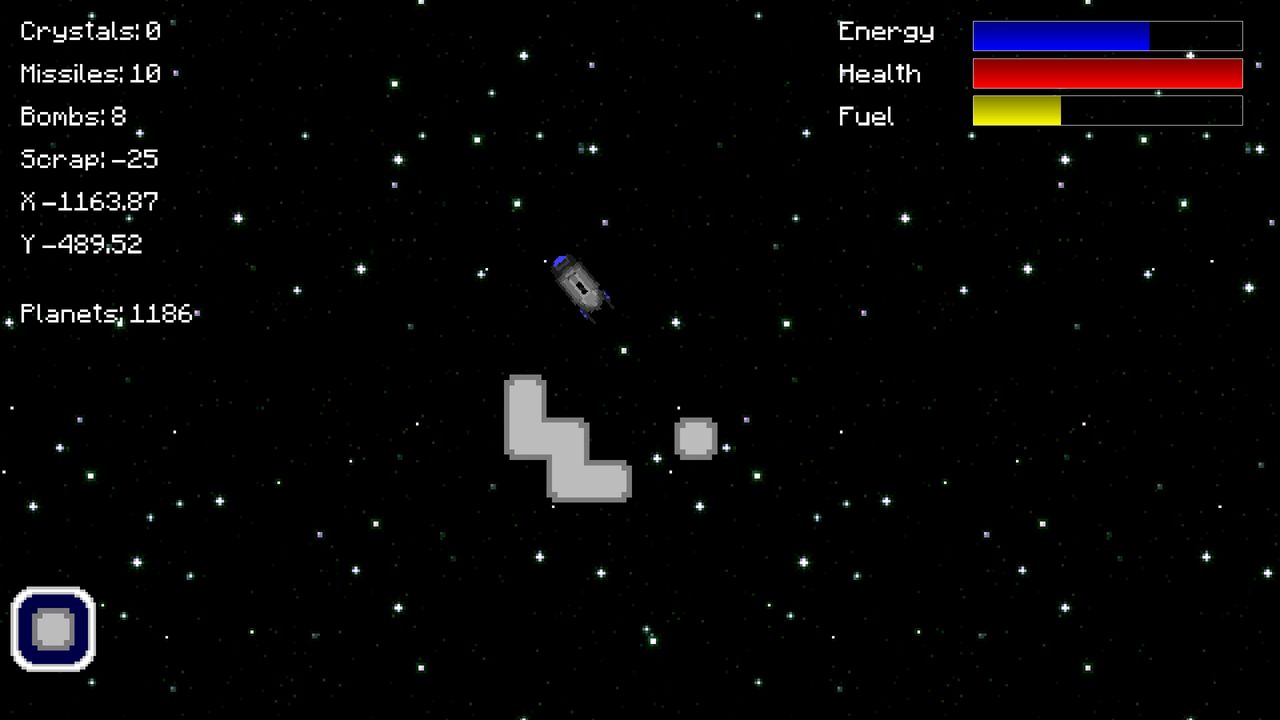
−25.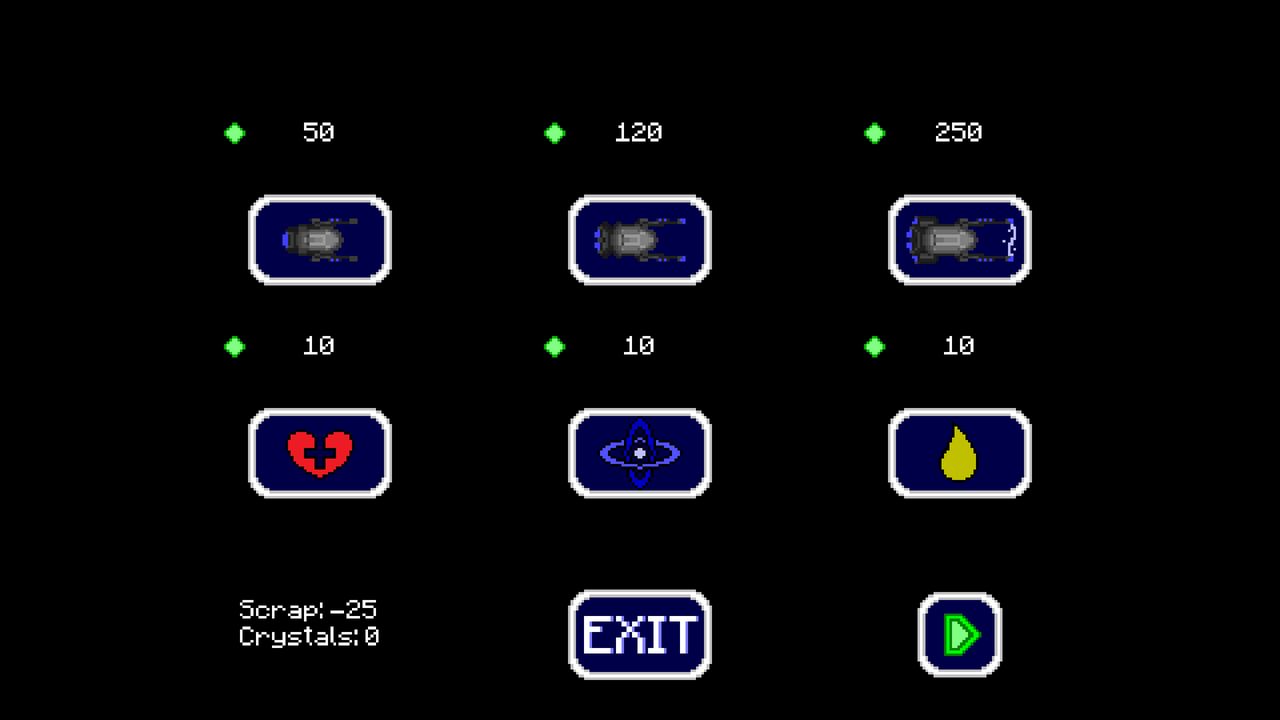
20 January 2017 · first rename
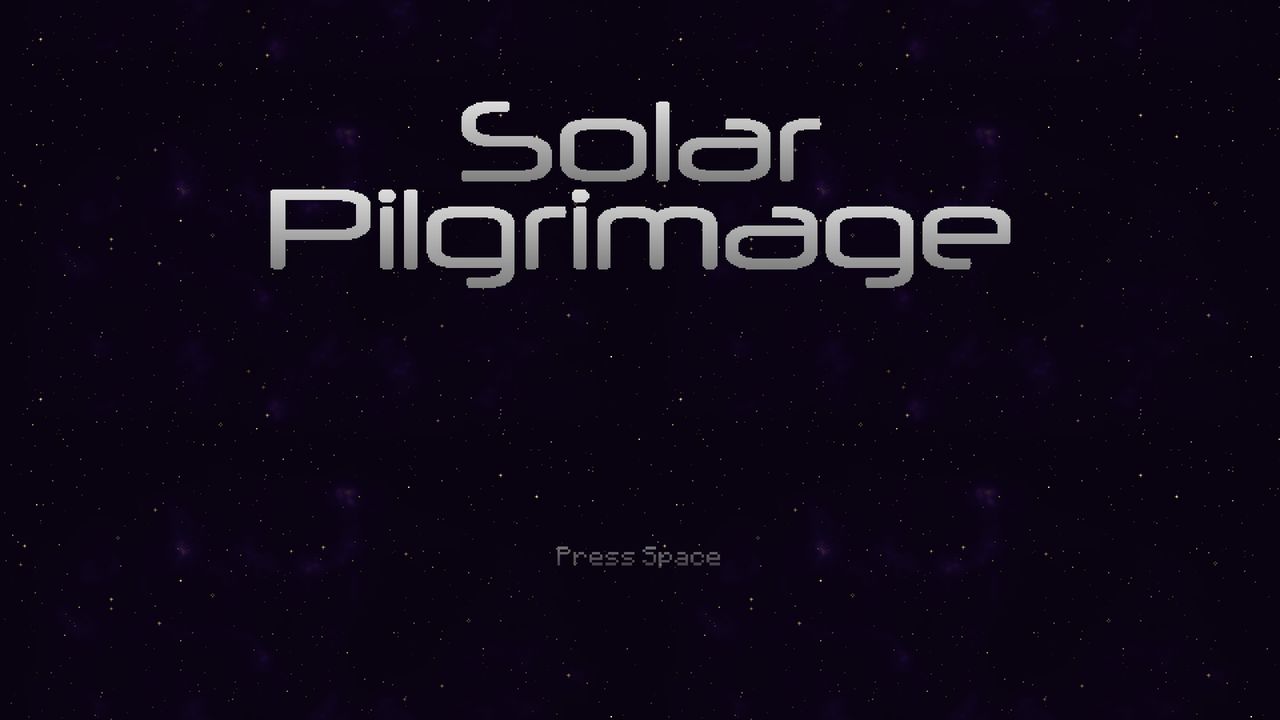
Solar Pilgrimage
6 screenshots · two months after Starim
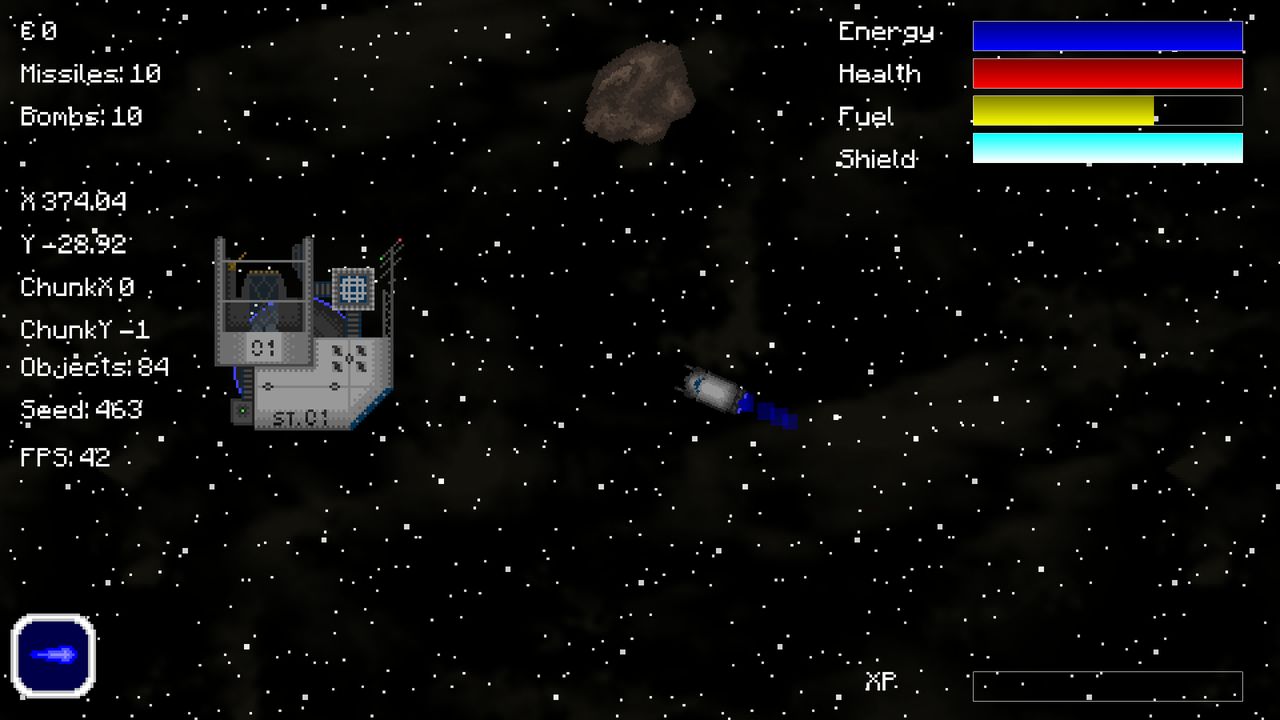
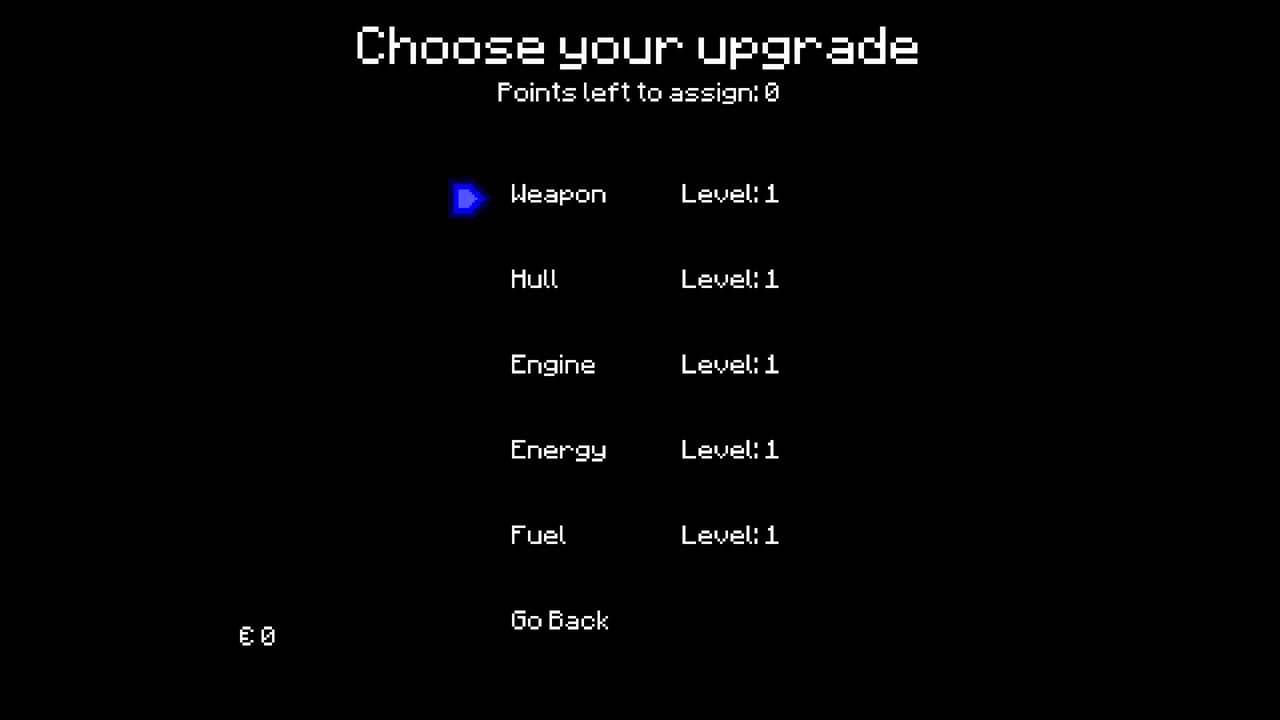
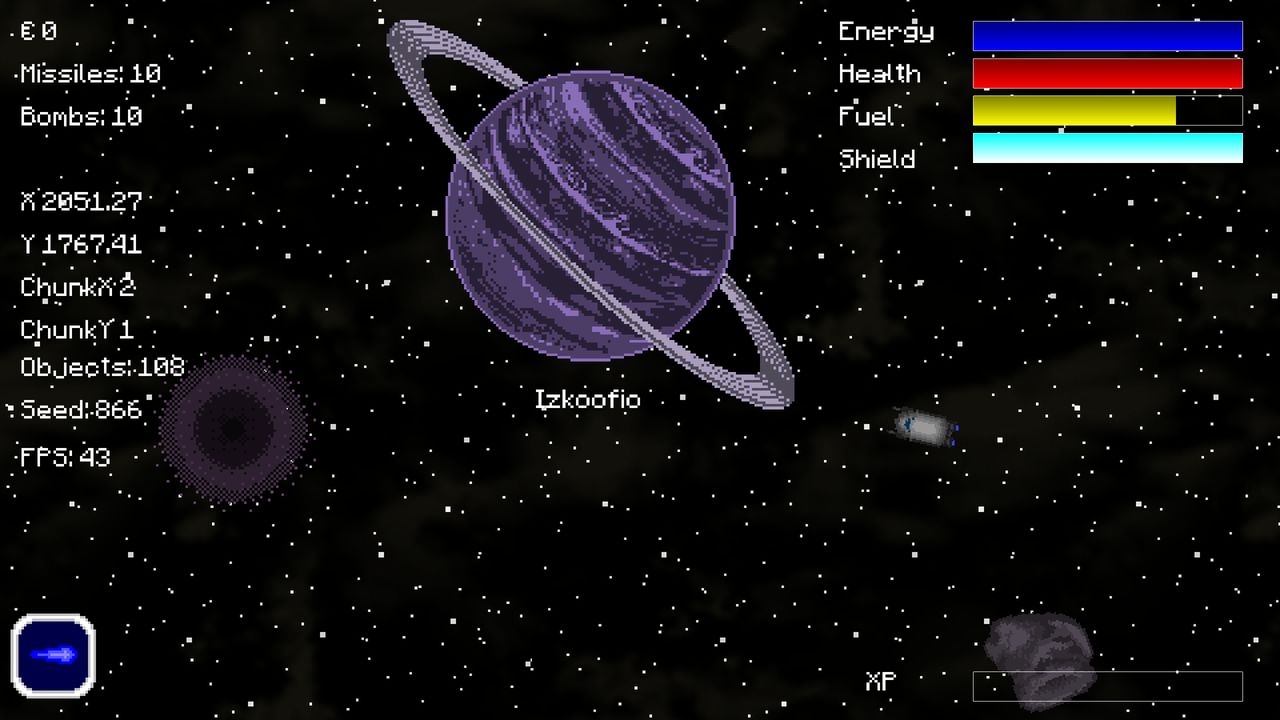
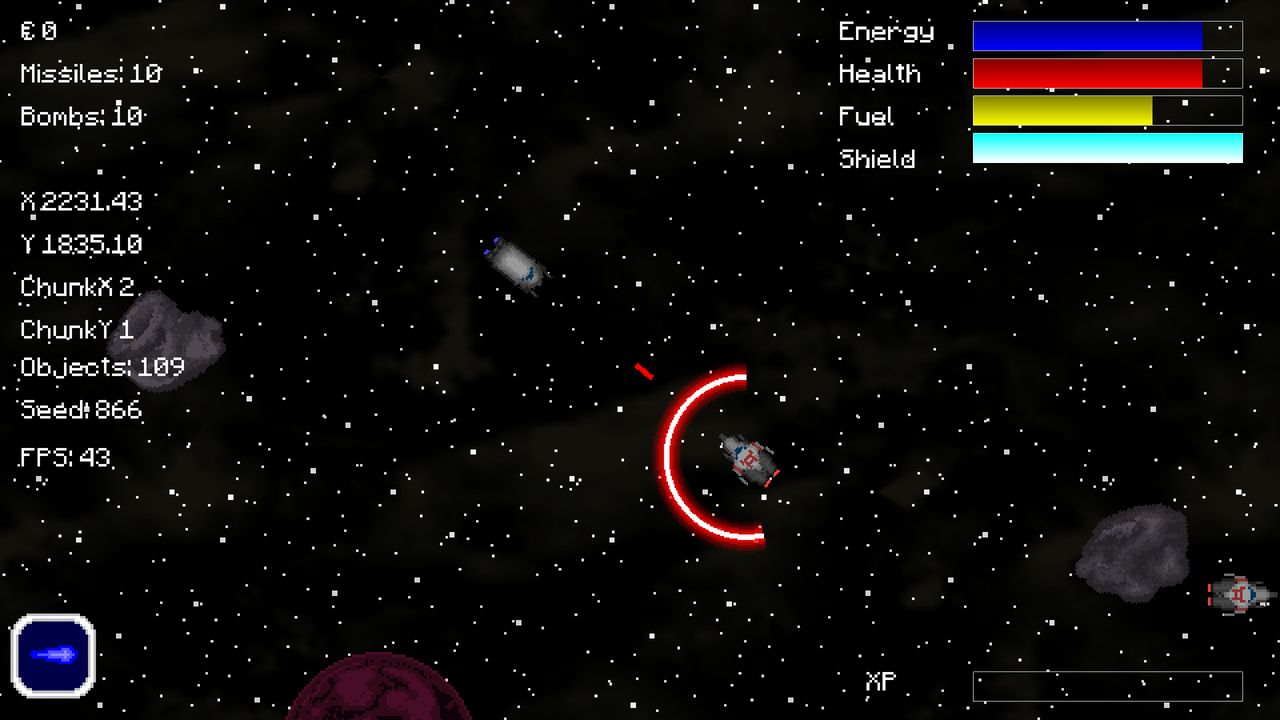
The readout now says ChunkX, ChunkY and Seed: 463. The bones of the current engine, two months in.
Two months later the engine has the structure it still has. The debug readout picks up
ChunkX, ChunkY and a seed. The world is streaming in around
the player in chunks now, generated from a number instead of existing all at once.
That chunk system is the piece of this project I've rewritten the most. Three times, before it held together. This is the first build where you can see it working, and it's running at 42 frames a second with 84 objects loaded, which is worth remembering for later.
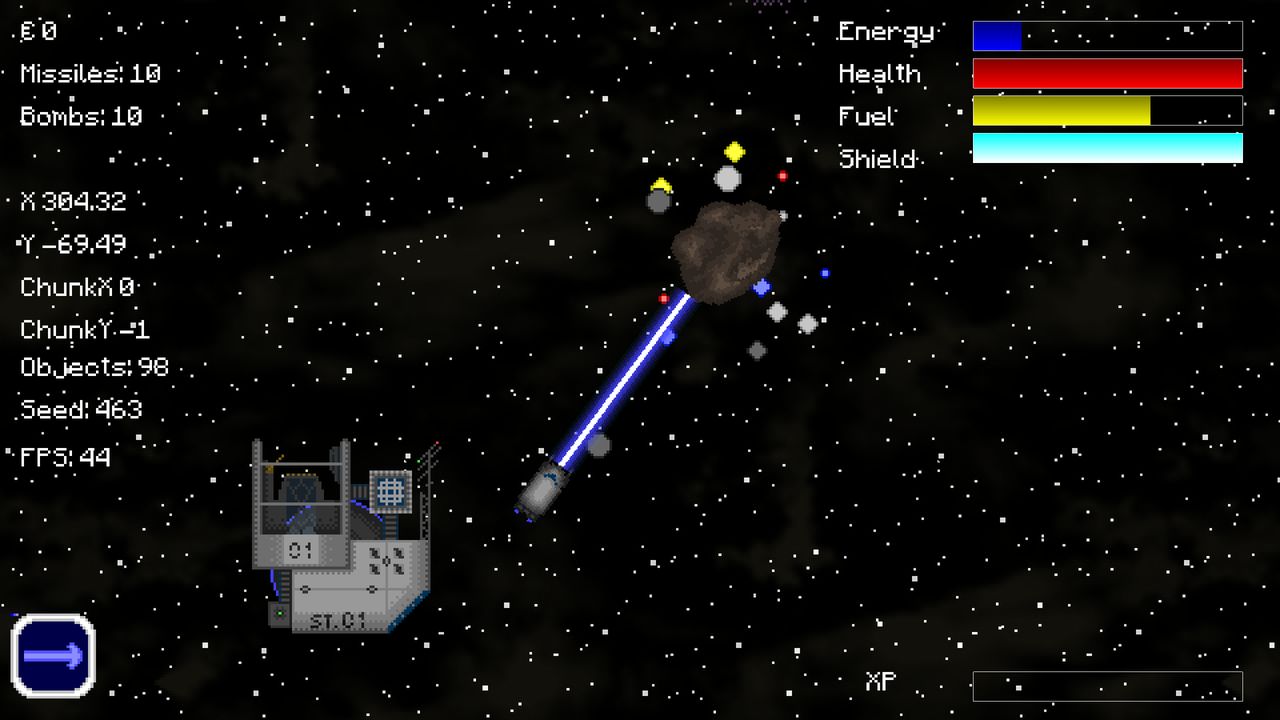
Everything else grew at the same time. There are stations now, a shield bar, an XP bar, and an upgrade screen with five tracks on it. Mining became a beam that breaks rock into ore you can see. Planets started getting names too. This one is called Izkoofio, and nobody chose that. The generator did.
22 May 2017
Solar Pilgrimage the one where it stopped looking like a test
2 screenshots · same name, four months on
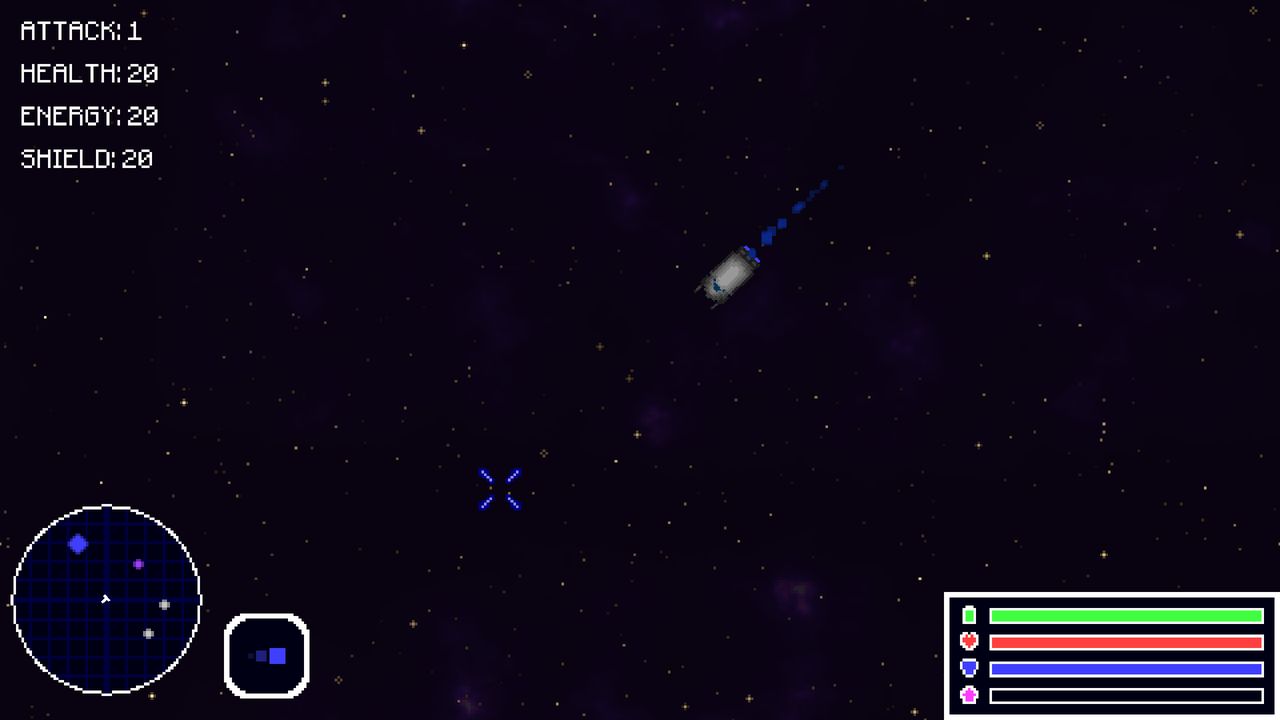
The debug list is gone. A minimap, a framed bar stack, and a sky with colour in it.
Same name as January, so this is the same run at the project and not a new one. It's also the build where the screen turns into an interface. The variable dump is down to four stats, there's a circular minimap with contacts on it, and the bars have moved into a framed stack in the corner with icons instead of words.
The background picks up coloured dust as well. That's the first hint of what eventually becomes biomes.
12 June 2017 · second rename
AstRogue The Icarus Project
2 screenshots · three weeks later
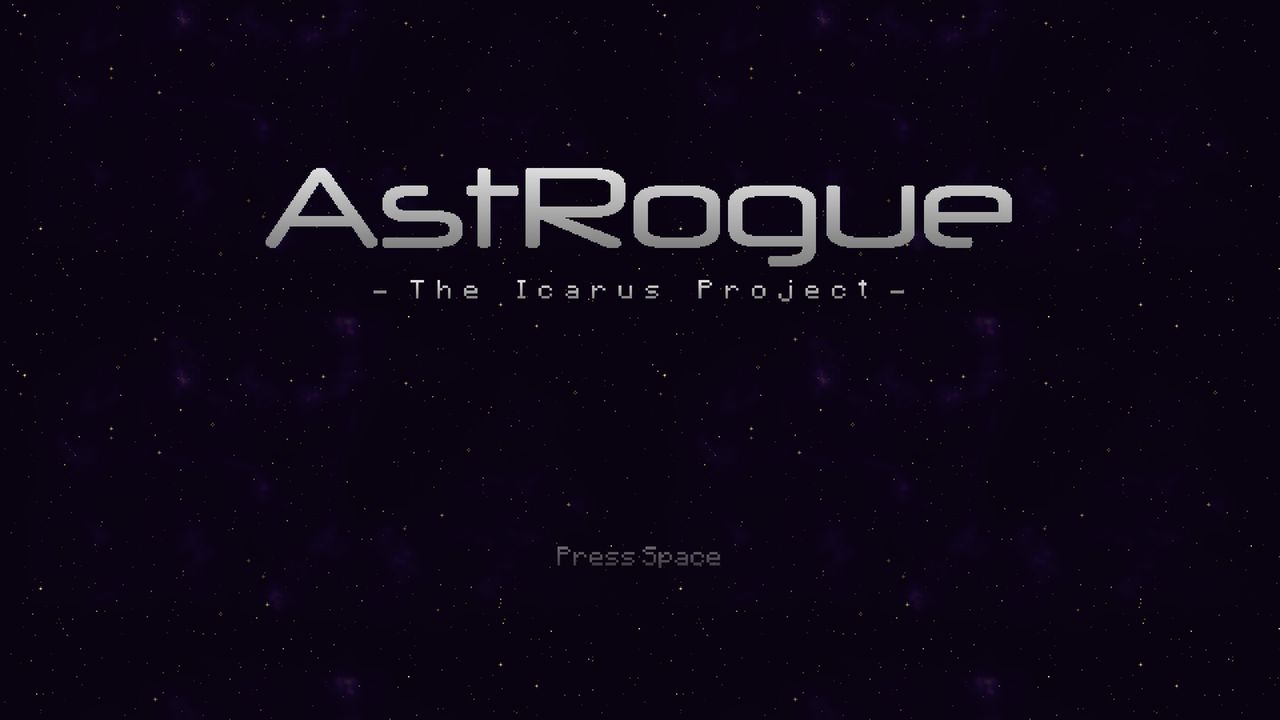
Three weeks after the last build, under a different name.
The subtitle was doing real work. The original concept was rogue AI that had turned on the people who made it, with the player stranded in the middle of the space they'd taken.
Icarus flew on wings he'd been given, went too close to the sun, and fell. Building something as intelligent as ourselves was meant to be the same mistake, with the same ending.
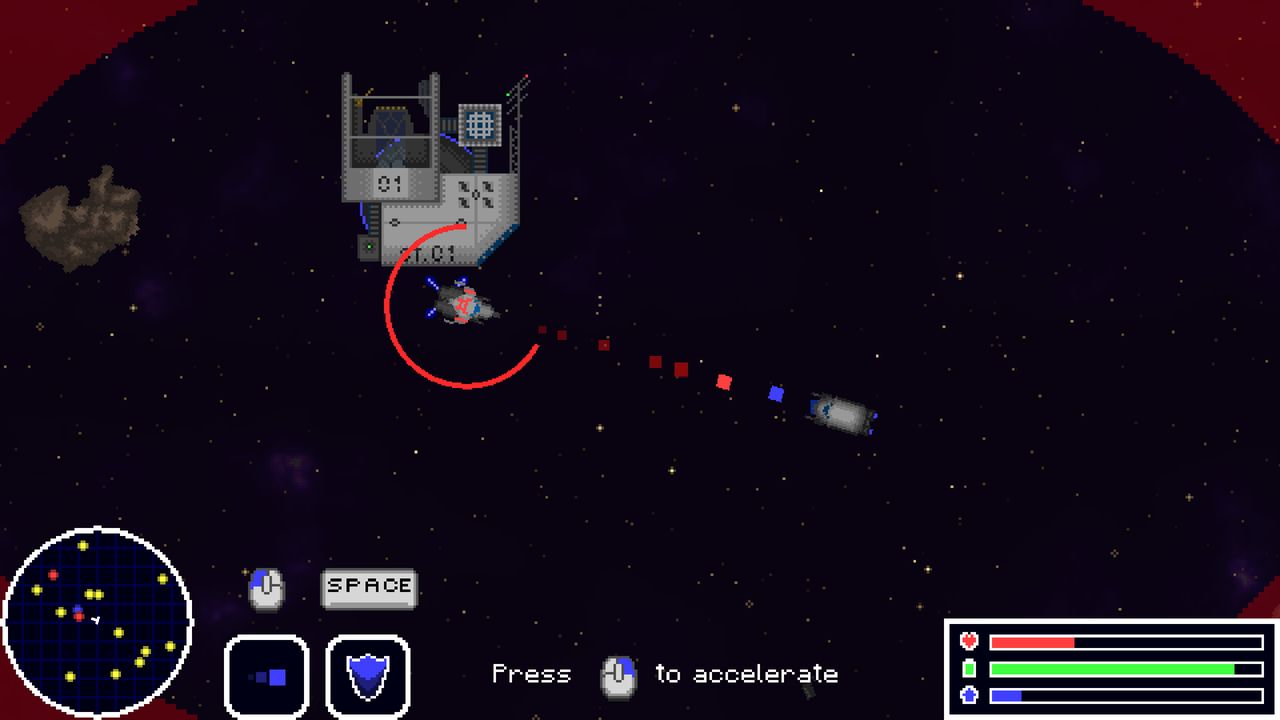
Mechanically it's the same build as three weeks earlier with the edges filled in. There are tutorial prompts telling you which key accelerates, and a red warning vignette in the corners of the screen.
26 October 2017 · third rename
Cosmic Ruins The Phaethon Project
3 screenshots · four months later
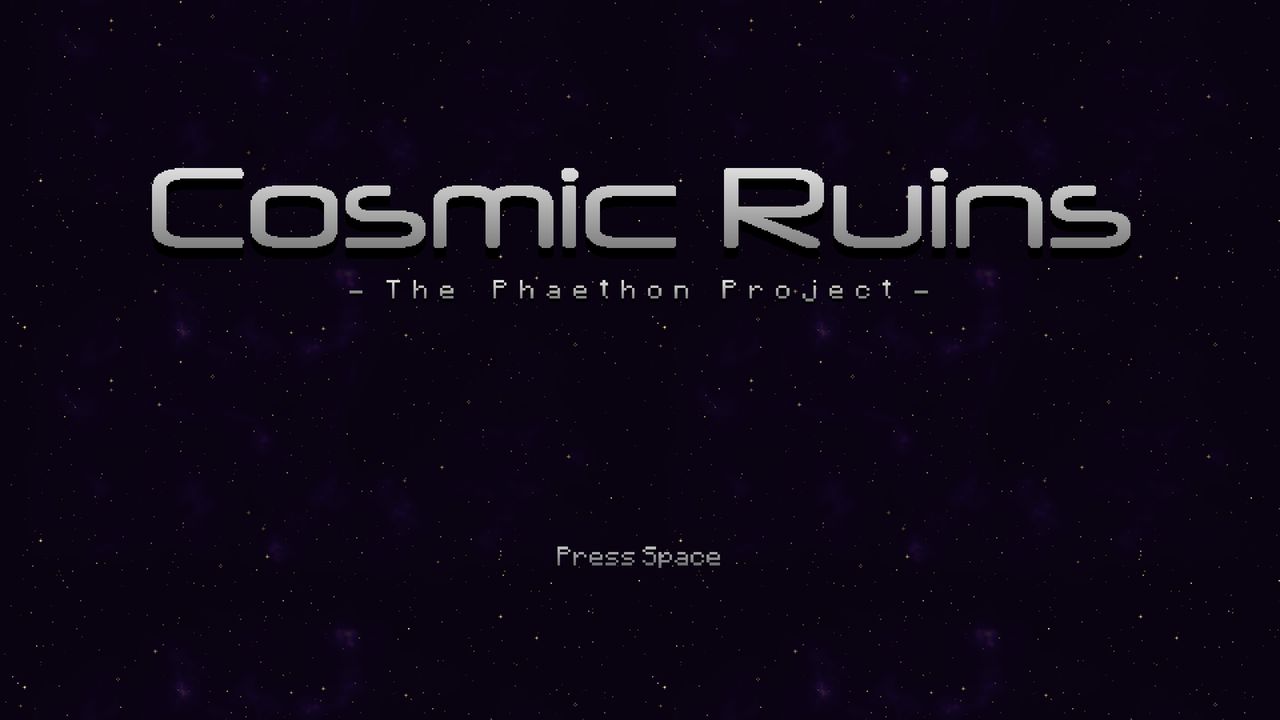
New name, same idea, and a subtitle that tells the same myth about a different son.
Phaethon talked his father into letting him drive the sun-chariot for a day, couldn't hold it on course, and was struck out of the sky before he could burn the world down with it. Icarus and Phaethon are the same story twice over, which is why I used both of them.
The interface gets its most decorated version here: a brass-rimmed minimap, ornate framed bars, a missile counter. Underneath it the debug readout is unchanged, still reporting 110 objects at 43 frames a second.
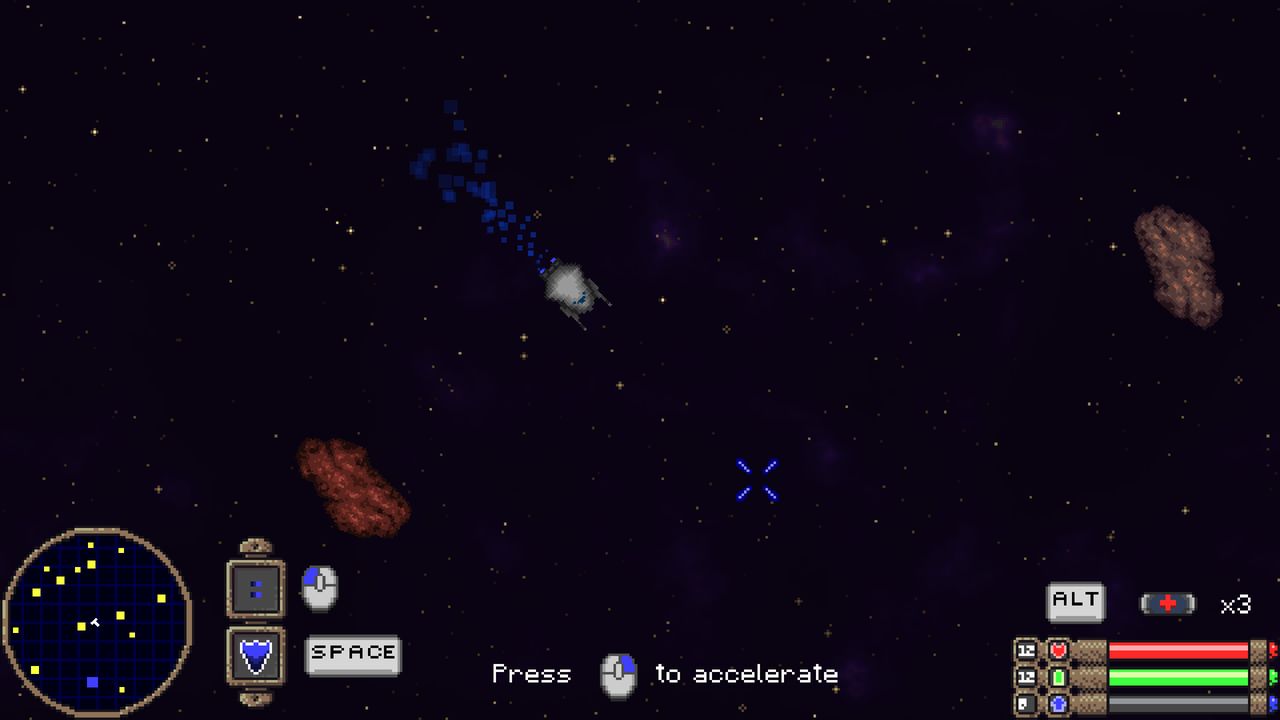
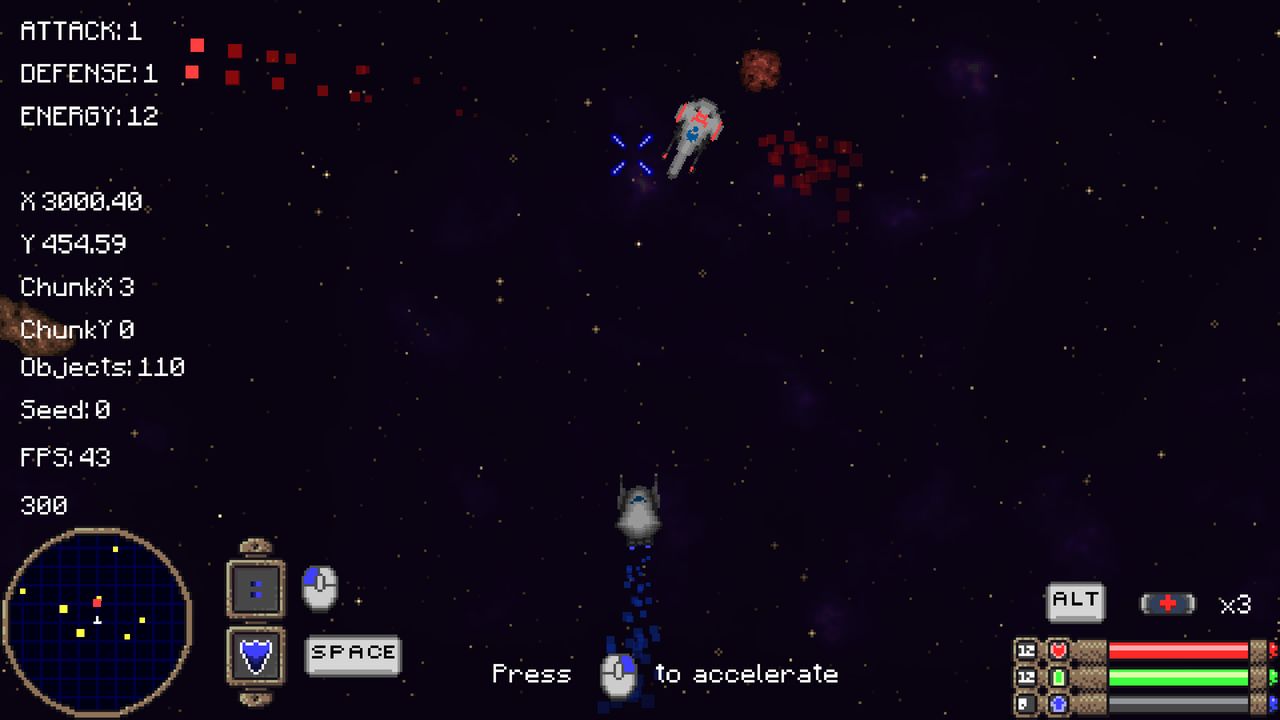
Objects: 110 · FPS: 43. Worth holding onto for the next section.3 March 2018 – 25 October 2025
Cosmic Ruins seven and a half years in one folder
10 screenshots · and then it became Space Game Project
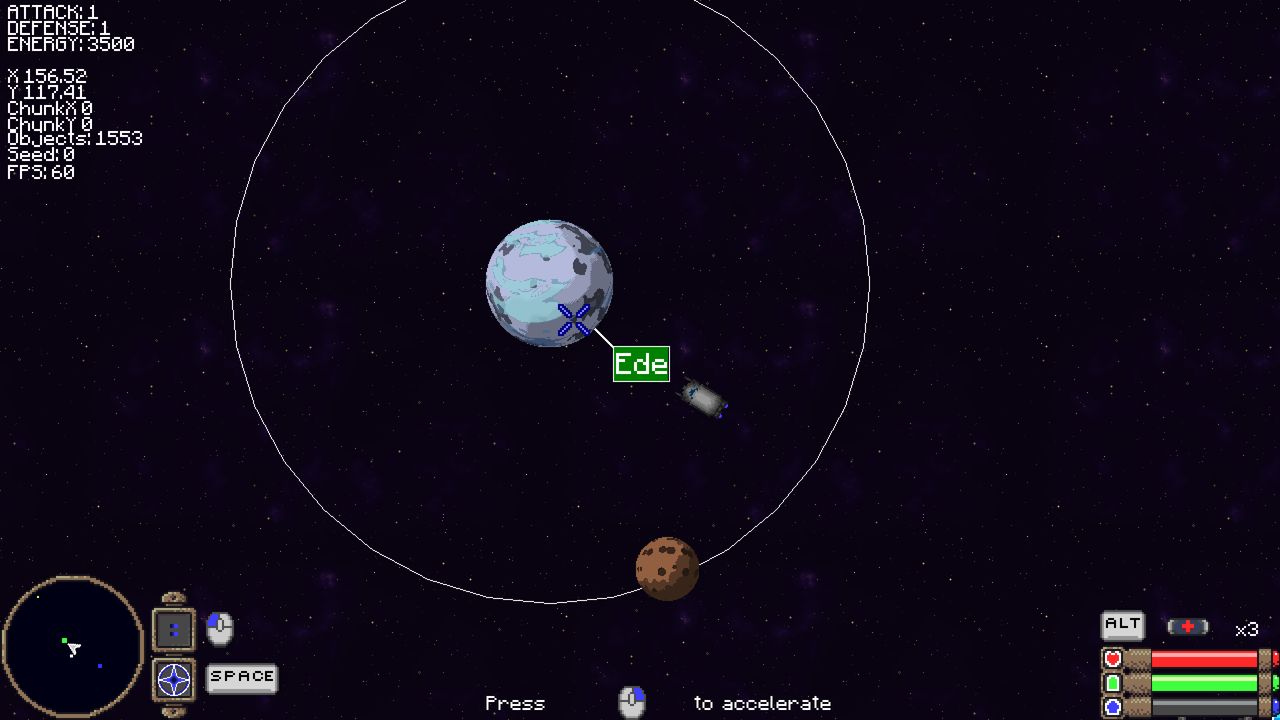
Solar systems with real orbits, with the orbital paths drawn in for debugging. Objects: 1553 · FPS: 60.
This is the long one. Most of the project lives inside this folder, under a single name, and somewhere in here it stopped being Cosmic Ruins and became Space Game Project. That's the build that was rebuilt into Solvane.
I can't date the steps inside it, but I know the order they happened in.
First, what the ship should look like
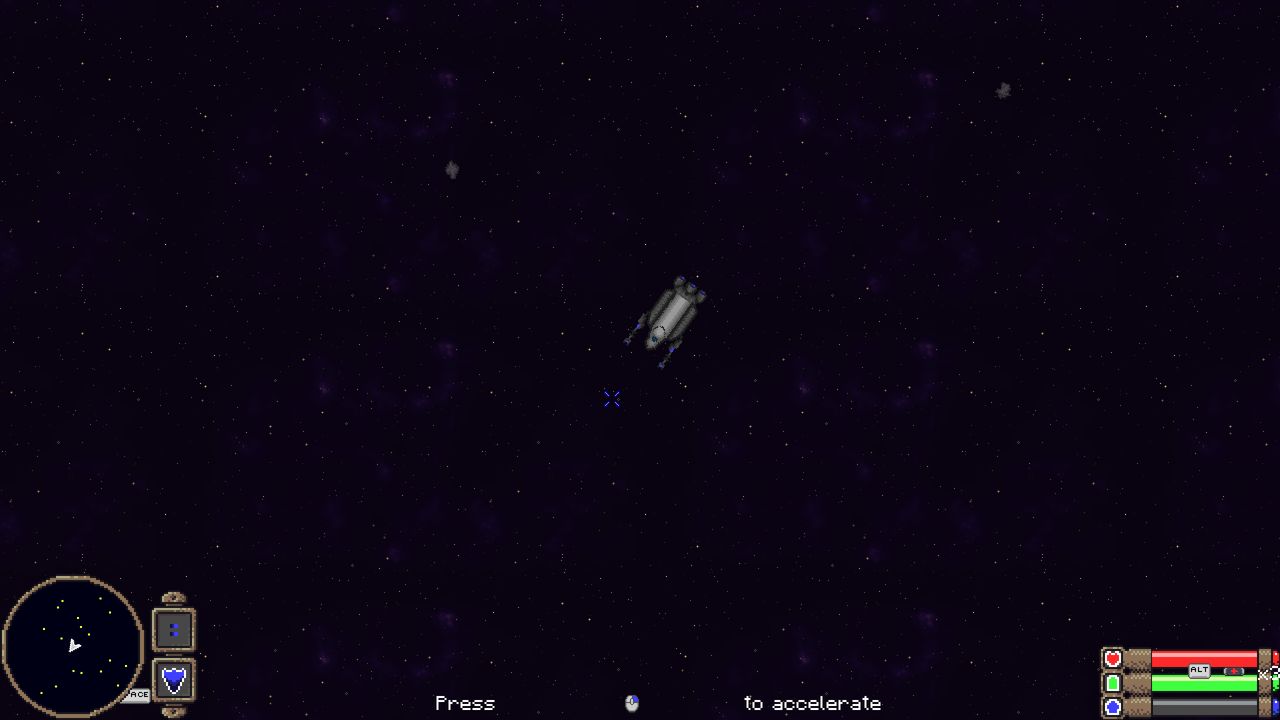
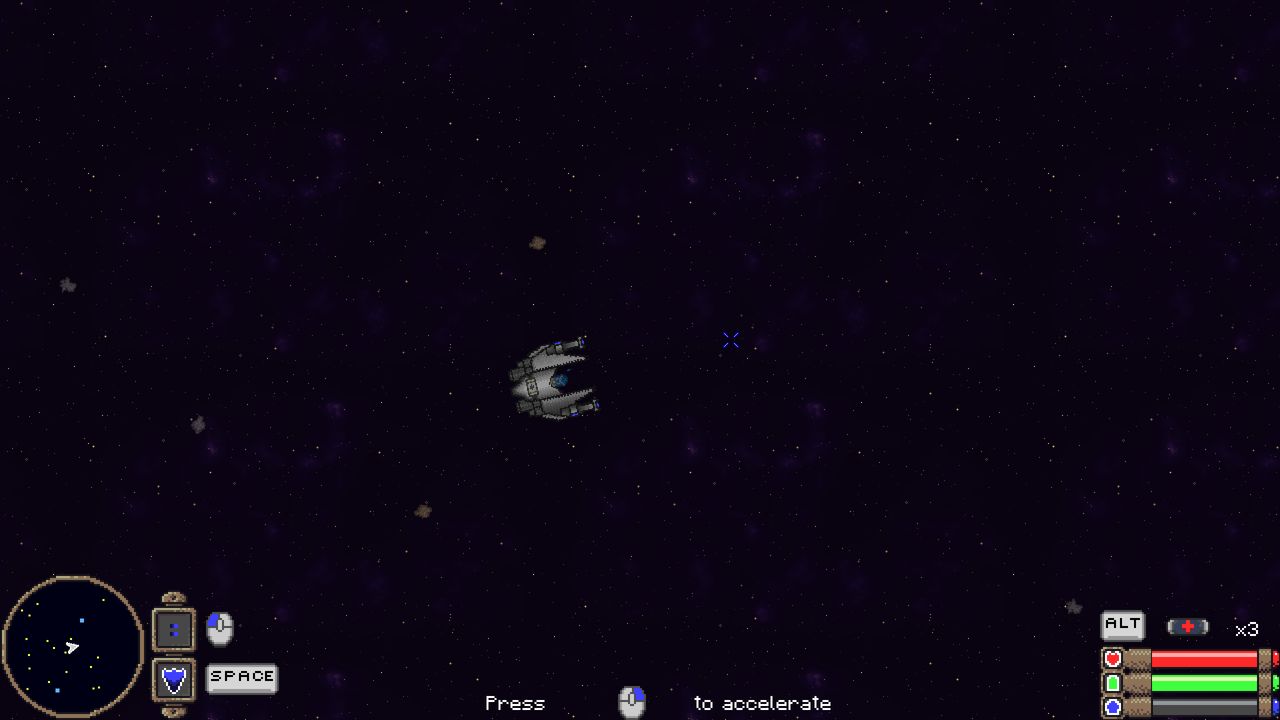
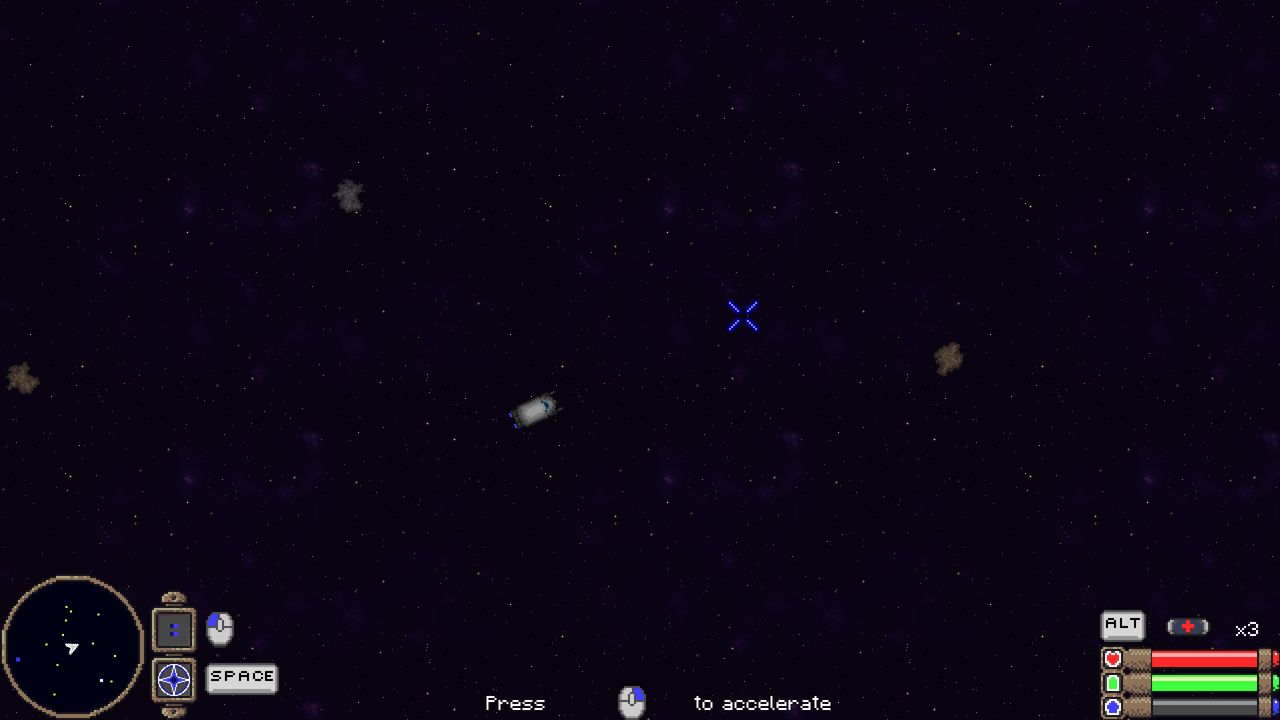
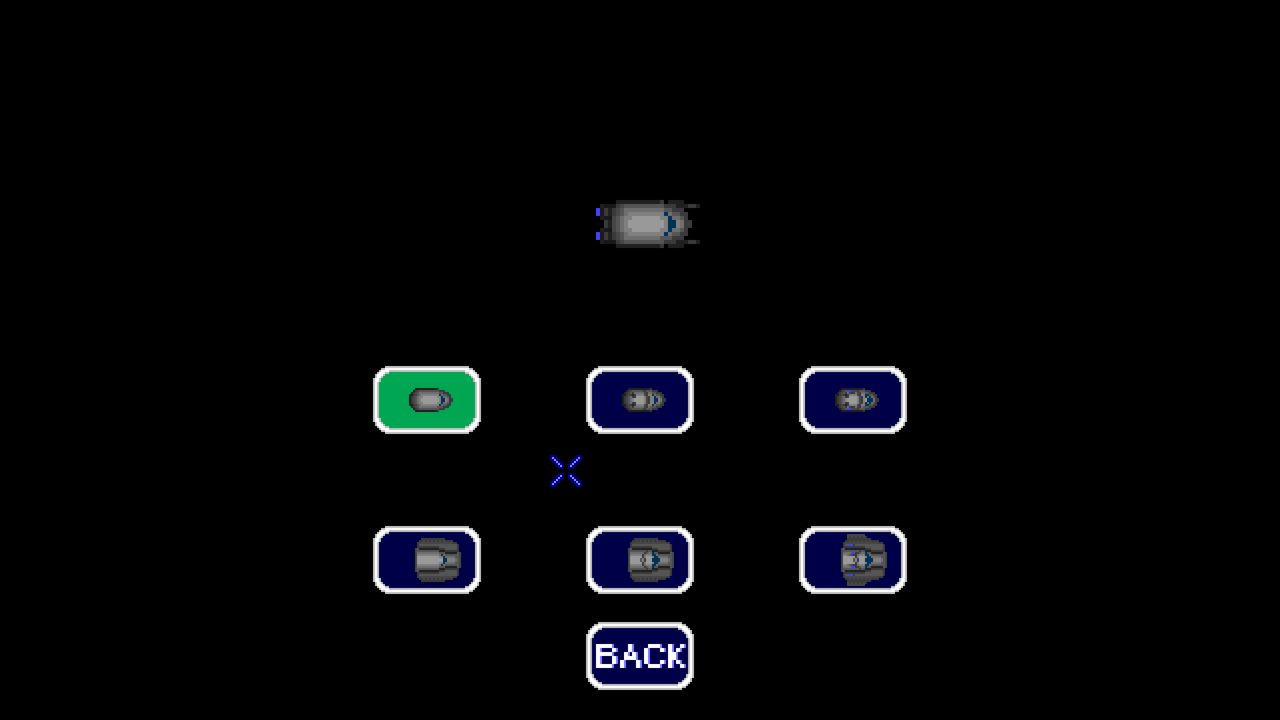
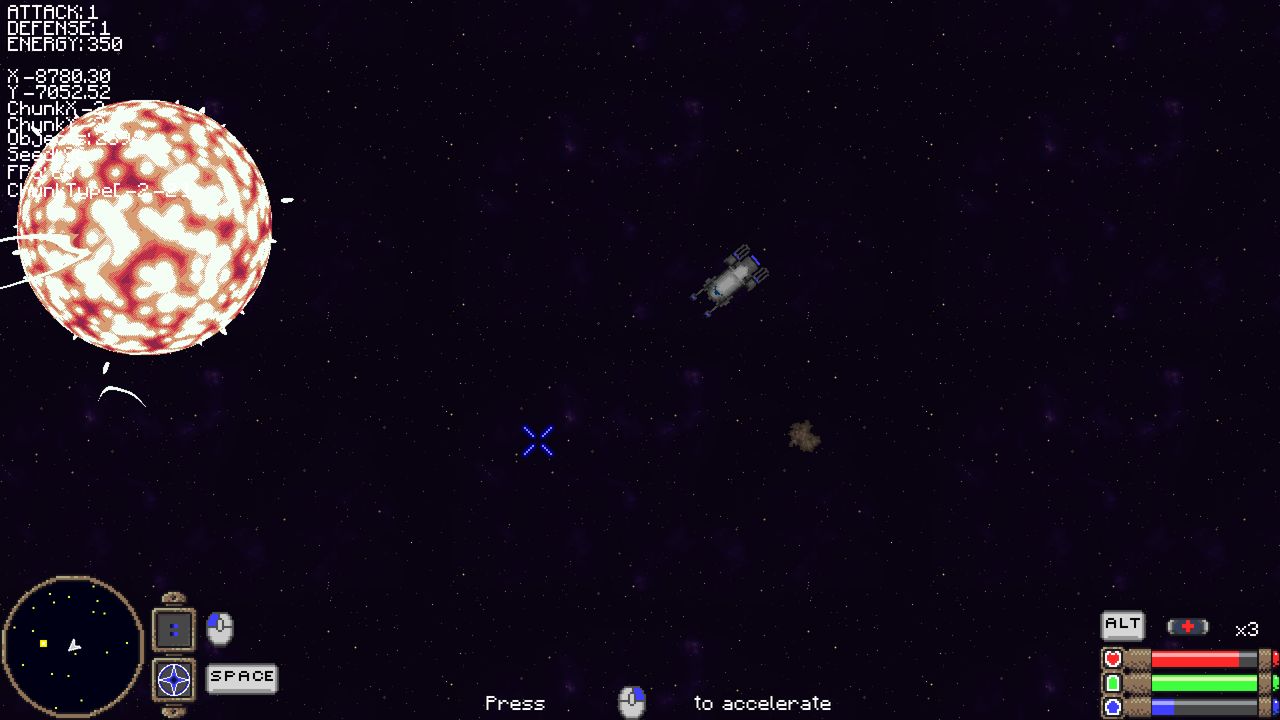
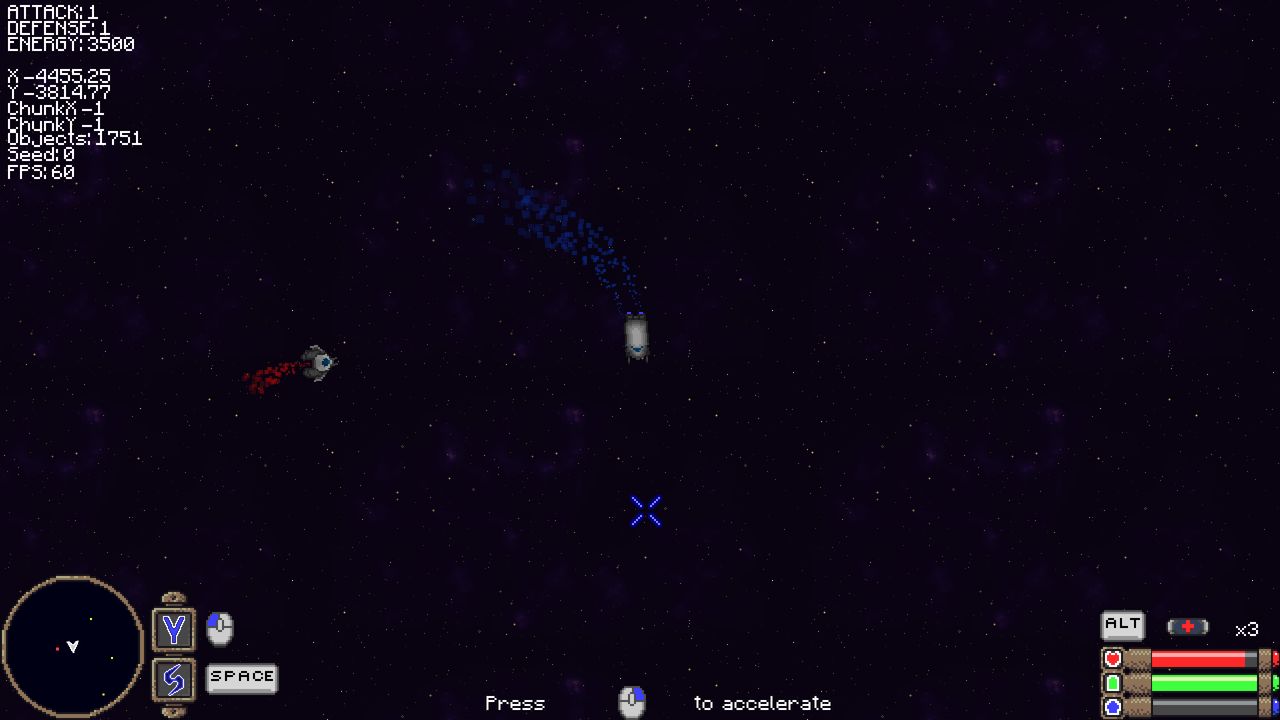
Three of these shots are me flying different player ships around, seeing what read well at that size against that background and what disappeared into it. No feature work, just looking at the thing.
Which turned into letting the player decide
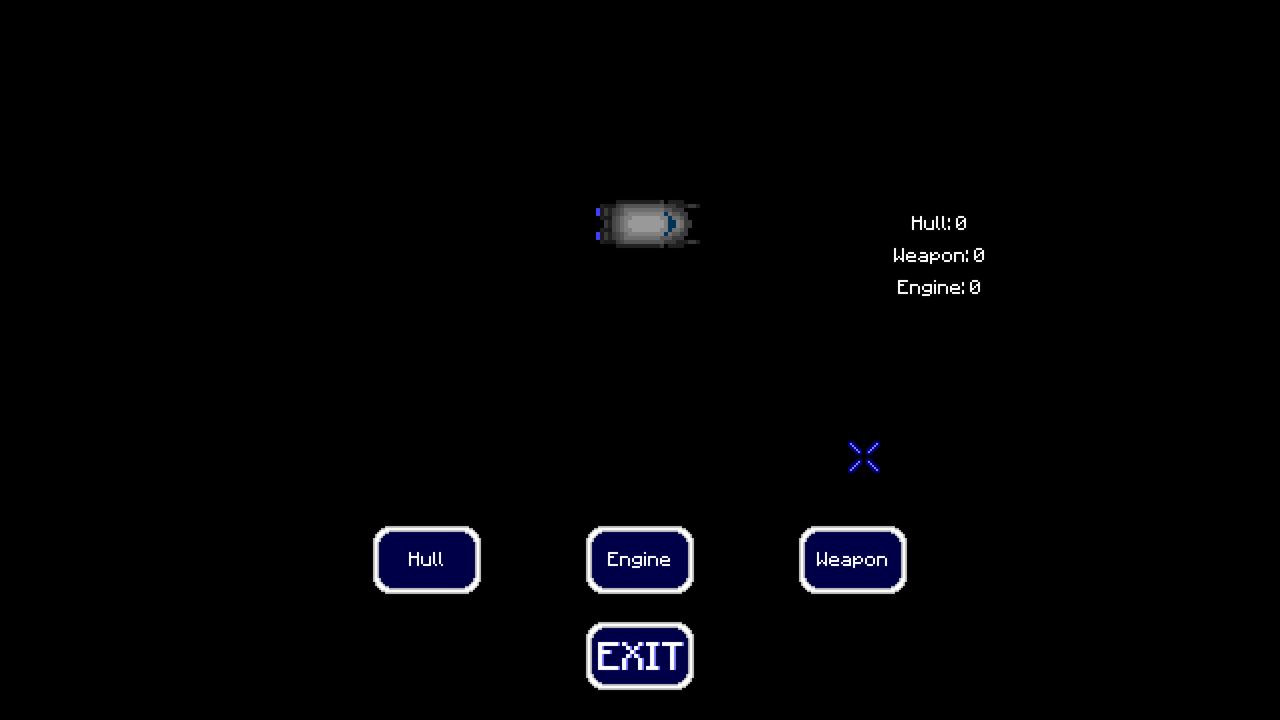
Spending that long on how a ship looks makes it fairly obvious that the player should be picking. So: a fitting screen with hull, engine and weapon, and a grid of parts to put in the slots. That's the ancestor of the ship configuration in Solvane now.
Then, things worth flying to
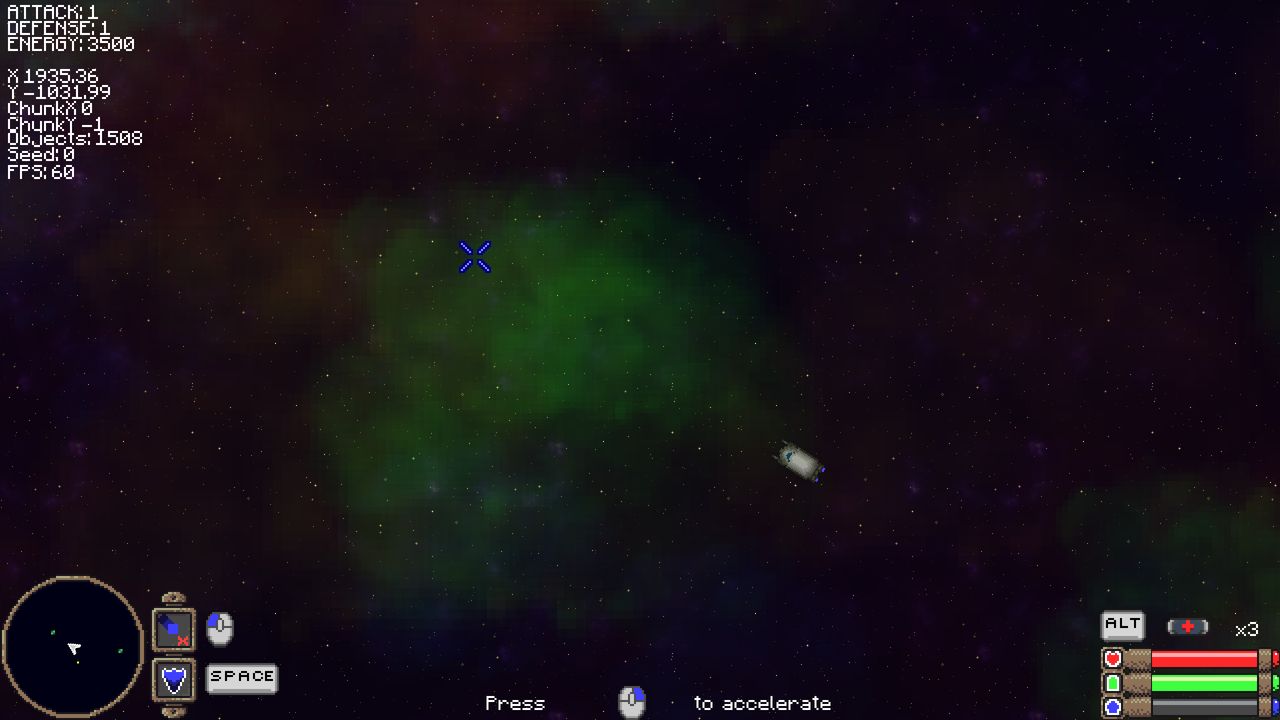
After that I moved onto chunk biomes and spectacles, which is the reason to fly anywhere at all. Solar systems with real orbital motion, with the orbit paths drawn on screen while I was debugging them. Stars close enough to matter. The first plasma storm, which is the green one.
And the part that doesn't photograph
The 2017 builds ran around 110 objects at 43 frames a second. These run over 1,700 at a locked 60. Fifteen times the world at half again the framerate, and that is most of what those seven years actually went into.
- Objects loaded
- 110→1,751 Oct 2017 → the last build in this folder
- Frames per second
- 43→60 while carrying all of the above
- Names used
- 1→2 Cosmic Ruins, then Space Game Project
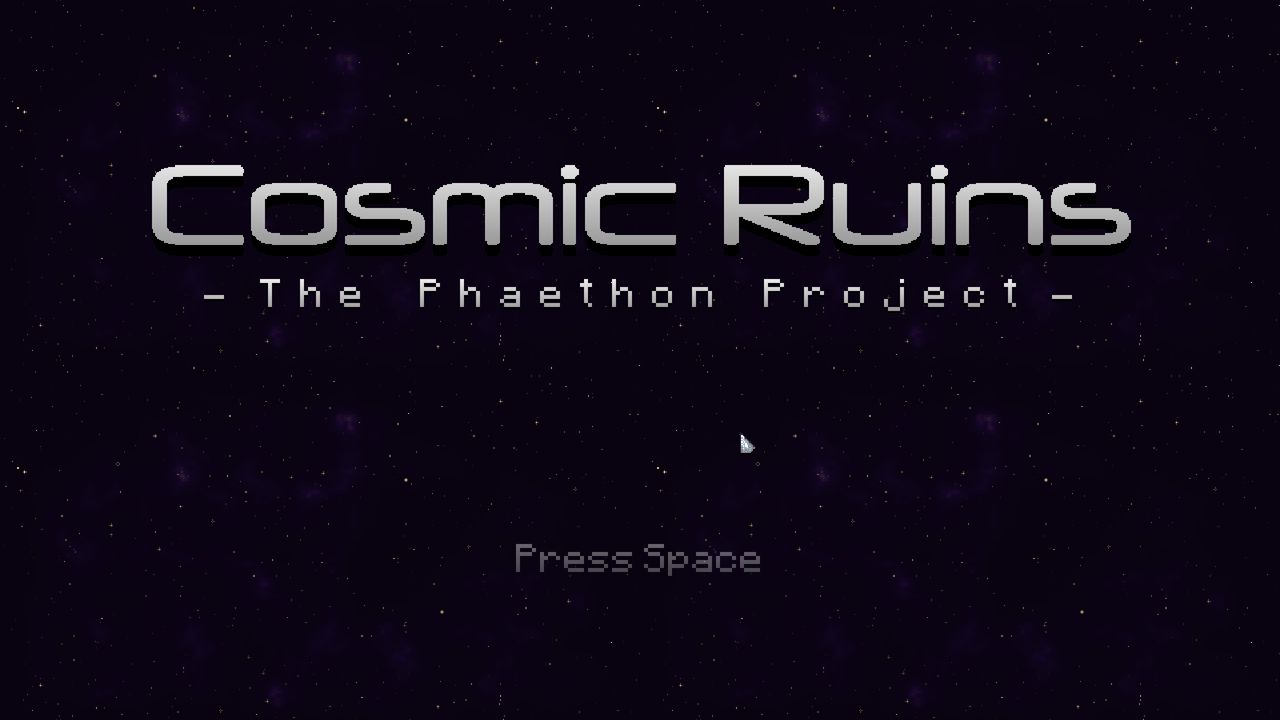
What survived all of it
Six names, a pile of rewrites, and gaps as long as nine months where I didn't open the project at all. A few things never went away.
- The galaxy was always generated. The first build I have counts 1,180 planets, and no one placed any of them.
- Mining is still a thing you hold and wait for. A red arc in 2016, a beam in 2017, the same idea now.
- The seed and the chunk coordinates have been on screen since January 2017, through every rename, in the corner of nearly every one of these shots.
- Walking away never ended it. The longest gap was about nine months, and that's still the thing I'd point to before any feature.